Back in the early 90’s this
is what a game controller looked like.
 |
| SNES Controller circa 1991 |
 |
| Super Mario Kart |
It had face buttons you
could press and two triggers on the top where your index fingers rested. This
was what we used to interact with video games. Now if you’re like me you might have
had a family member or friend who wasn't very familiar to playing video games
but wanted to give it a try. You would pop in Mario Kart and hand the
controller over to them. After giving them a quick overview of how the
controller works they press start and the race would begin. They seem to be
doing fine, they are accelerating and keeping up with the rest of the racers. Then
they get to the first turn and they start turning the controller on its side as
if it was a steering wheel. You might tell them that isn’t necessary but they
continue to do it unconsciously.
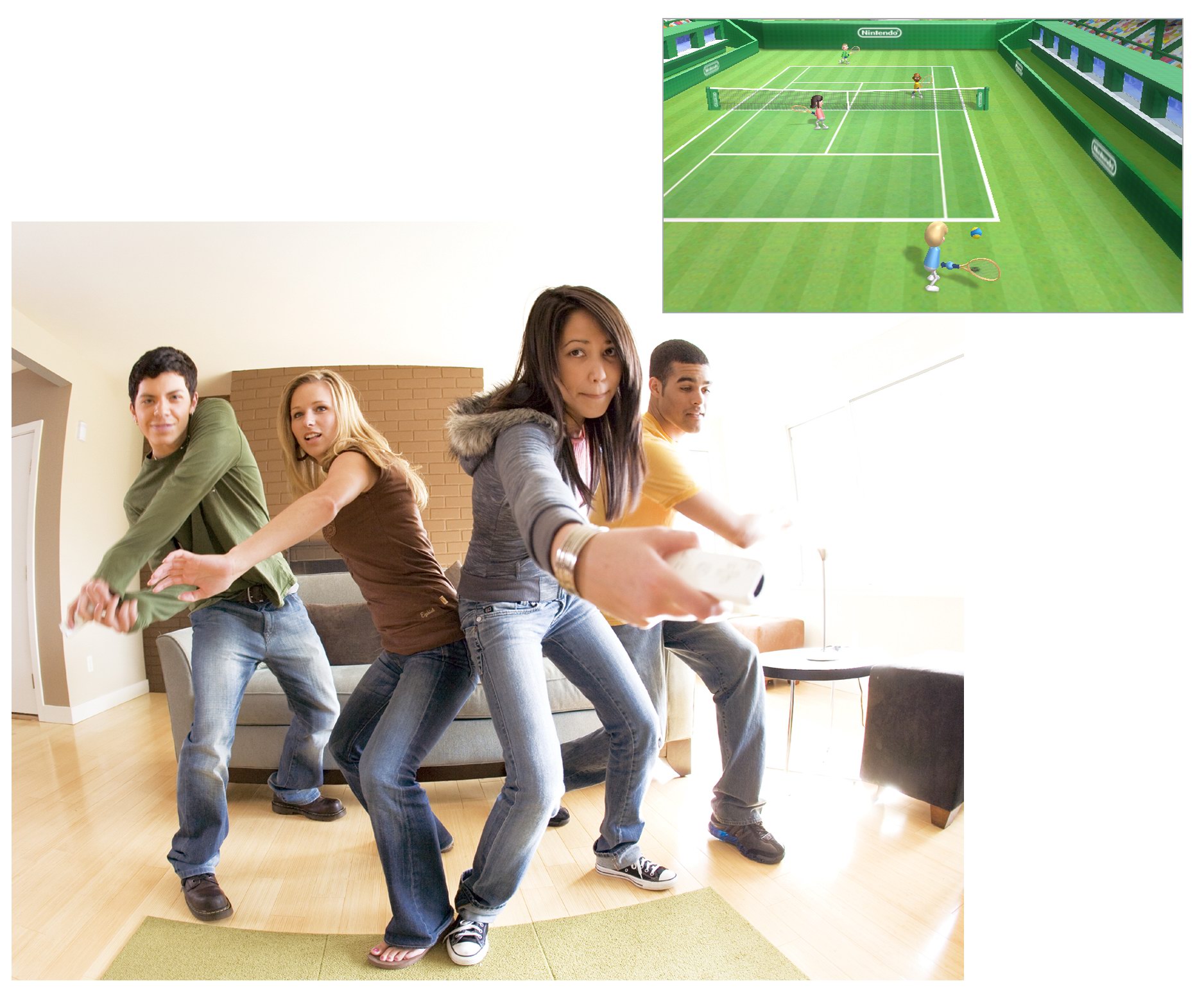 |
| Motion Gaming for Everyone |
Jump ahead to 2006.
Nintendo releases their newest game console, the Wii. What is special about
this release is that Nintendo has added a new way of interacting with the game
world, motion control. Now that embarrassment of watching your mother rotate
the controller fruitlessly becomes a new kind of embarrassment where all the
flailing around is actually for a purpose.
The Wii was a smash hit. Stock was sold out everywhere for months. That left Microsoft and Sony sitting there scratching
their heads thinking “How do we do that with our consoles”? Their response to the
Wii’s motion control came in the form of the Kinnect and PlayStation Move respectively.
 |
| Everyone can play |
This time around
things were different. The hard-core fans were joined by the everyday people,
the non-gamers. Through games like Nintendo’s Wii Sports and Just Dance, gaming
was becoming more social. It was a time where practically anyone could
play along and join in the fun, which Nintendo wasn’t shy of pointing out in
their advertising.
As of today the motion
control fad has died down quite a bit. When it first hit it seemed like motion
control was going to be the future of how people interacted with games. While
motion as an interactive method is still around, the traditional multi-button
controller is still king.
As
technology advances and interfaces change what does the future of motion gaming
look like? In what new ways can new interface methods change the way we play
games together? I think motion as an interface will continue to evolve and help
to try and remove the boundary of entry for the non-gamer.
- -
Sean McParland
References
http://en.wikipedia.org/wiki/Wii
http://www.xbox.com/en-CA/Kinect
http://a57.foxnews.com/global.fncstatic.com/static/managed/img/Scitech/876/493/kinect-family-tv.jpg?ve=1&tl=1
http://www.the-games-blog.com/wp-content/uploads/2013/12/wii-grandparents.jpg

No comments:
Post a Comment